
What is a gape dart? - The principles of contouring and the bust circle.

Updated: Aug 7
A gape dart is a small dart used on openings like necklines and armholes to ensure your garment fits close to your body.
The images in this blog are from my video tutorial on gape darts and contouring, which you can watch here for a lot more information than I can cover in this blog.

You might have seen something like this before - it's a bust circle contour guide. The radius of the circle is the measurement from the bust point to under-bust (where your bra band fits). It's drawn with the centre at the bust point.
All of the shaping on the bodice goes to the bust point, even if you have a dart on a pattern that's shorter, it would have originally been drafted to the bust point and shortened to avoid making the bust too pointy.
We use these contour darts when opening up a neckline and/or armhole.
To make sure the neckline/armhole fits close to your body, the contour darts show you the size of the gape dart needed.
You might have seen guides with more darts than this, but these are the basics you need for general dressmaking, if you're making underwear/corsets etc you'd need more contour darts than this.
You don't actually need to draw this on your pattern, but it does help to understand the principle of gape darts.

You can see from this pinned sample where the darts on the pattern I showed are on the body, and how it makes the sample fit close to the body around every contour, rather than just a straight line from bust point to waist / shoulder etc...

In the above screen shot you can see where I just cut out the neckline on a sample, it doesn't now fit close to the body with the new neckline, and this is because we need to introduce a gape dart - this isn't a dart that is sewn on a finished garment, but part of the process when making the pattern - we need to take excess out from the point I'm pinching it and move it to one of the other darts - we usually move it to an existing dart, making that dart slightly wider.
So how we we know what size these contour darts need to be?
Well that's the tricky bit, they all depend on our own individial proportions. A figure with more curves is going to need wider contour darts and vice versa. It's not dependent on your body size, but the proportions between cup size and frame (i.e. shoulders, waist, height etc).
Therefore I can't state exact measurements for the width of the contour darts on the bust circle, if you want to work out your contour darts so you can reference them each time you make a new pattern from your block, you need to make a bodice sample and pin it on yourself to work out the sizes, what you've pinned to your body is what you need to draw on your bust circle.
So do I use this every time I make a new pattern?
The simple answer is no, the more pattern cutting you do, the more you just know how much of a gape dart to do, and then you perfect it with a sample - it's always good to make a sample first when drafting a pattern with a new neckline. (I also recommend stay stitching the neckline before you try your sample on to avoid stretching it out accidentally.)
So let's have a look at an example to help this make sense....

The above image shows 3 different neckline sizes. Each of the necklines cuts through the contour dart in a different place, and the width of the contour dart where you cut through it, is the size of the gape dart you need to use when opening up a neckline to that position.
You can see from above that the more you cut out your neckline, the bigger the gape dart needs to be.
When drafting you need to cut down one side of your contour dart, and through the centre of an existing dart.
When you close the contour dart to the point you need to, it opens up the other dart.
These screen shots below show you what I mean.
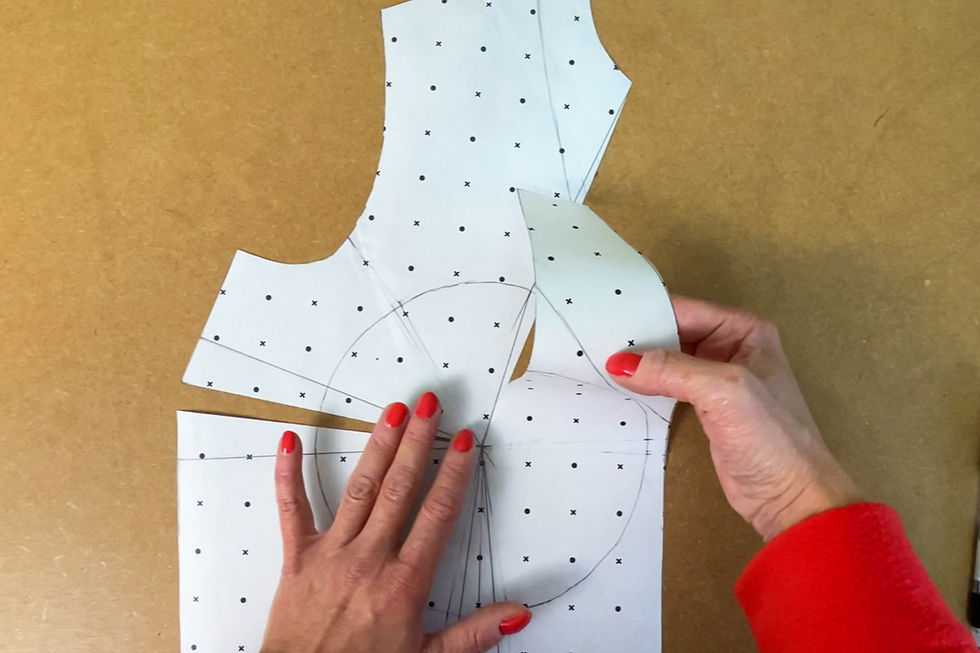


So that's the very basics of a quite in depth subject, but I hope it gives you a good idea of why your necklines and armholes might gape, and how to correct your pattern so it's not a problem.
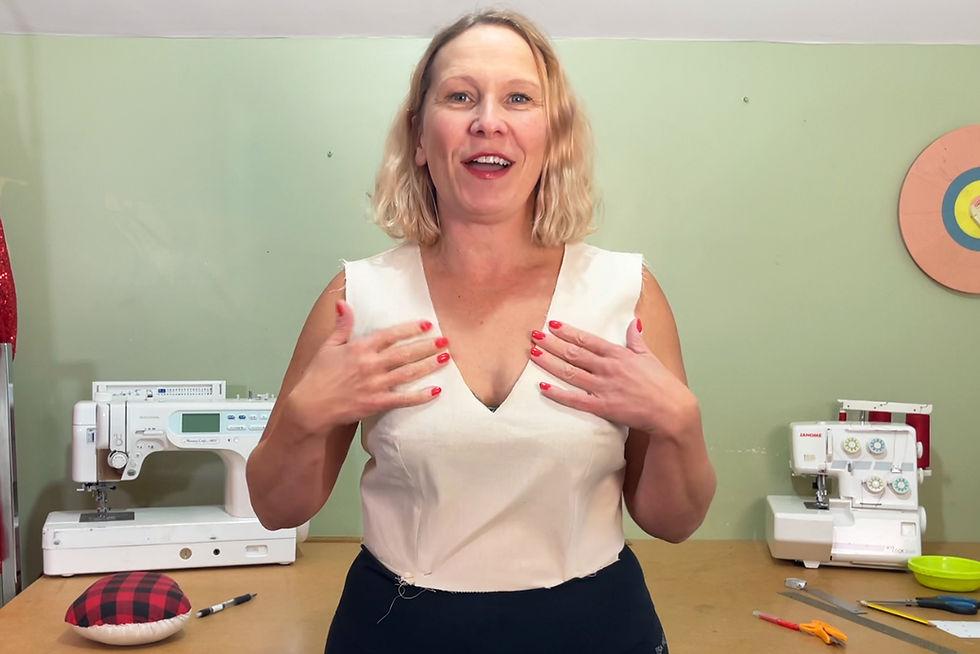
Here's a new sample from the same block with a low v when the pattern has been corrected with a gape dart.
You can see that it fits much better than the one I had just cut at the top of this post!
If you want to learn more about it I really would recommend watching my tutorial where I show you in detail how this all works, one step at a time. I think it's much easier to understand when you can see me talk through it and show you an example.

Watch here on YouTube.


Comments